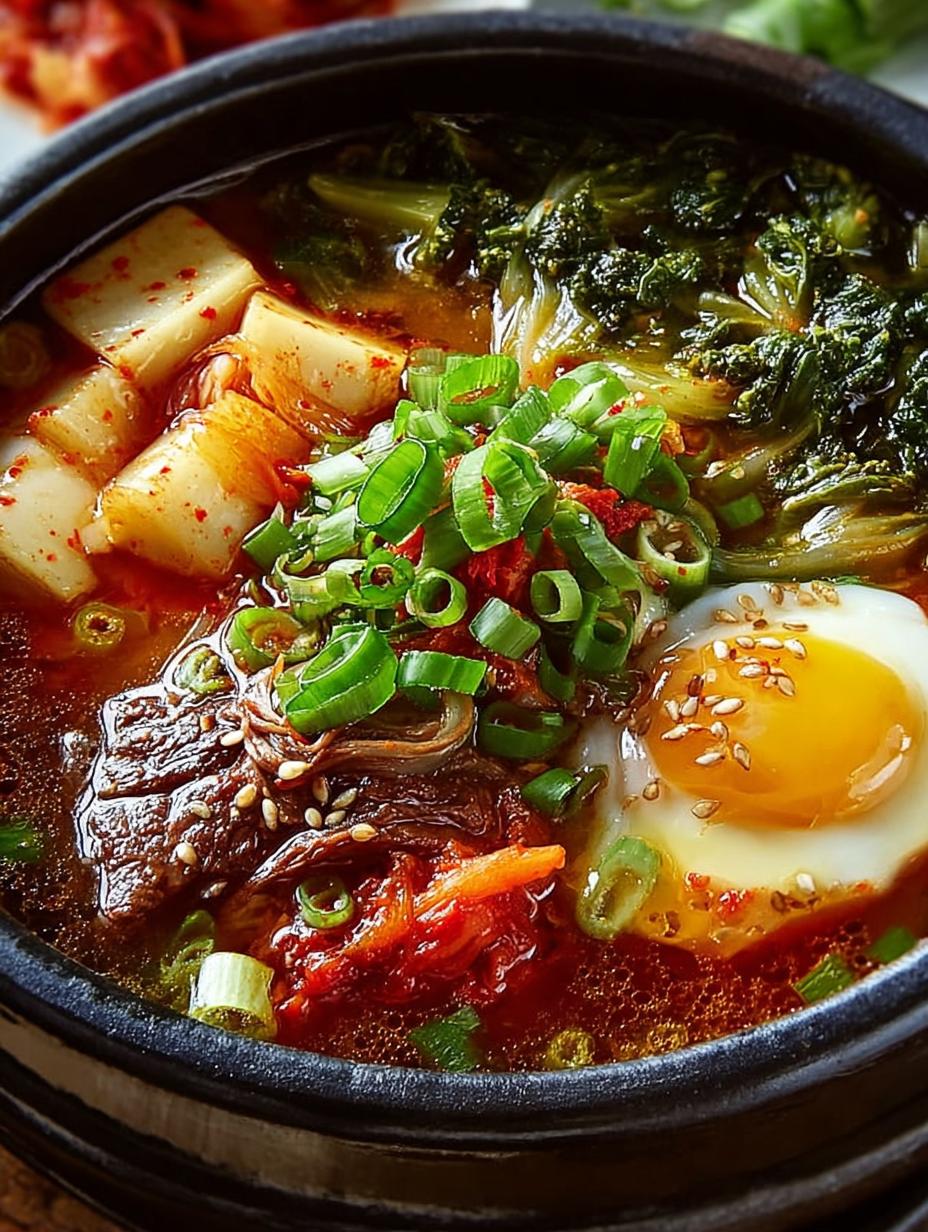
Korean Winter Soup is the embodiment of comfort, especially during the chilly winter months. With tender beef brisket and fresh vegetables simmered in a rich, spicy Korean broth, this dish is not just a meal; it’s a hug in a bowl. The combination of gochujang and gochugaru adds a warming heat that makes this soup incredibly satisfying. Whether you’re enjoying it with family or savoring a bowl on your own, it’s the perfect remedy for cold weather blues. Let’s dive into how to make this traditional Korean winter soup that has become a staple in homes across Korea.
Why You’ll Love This Korean Winter Soup
This soup is more than just a meal; it’s a warm embrace on a cold day. Here’s why you’ll love it:
- Hearty and filling, making it an ideal choice for dinner.
- Rich in flavor, thanks to the spicy gochujang and fresh garlic.
- Contains a variety of vegetables, providing essential nutrients.
- Easy to prepare, perfect for busy weeknights.
- Great for meal prep; it tastes even better the next day.
- A beloved traditional Korean dish, rich in cultural significance.
This Korean winter soup is not just a comfort dish; it’s also a great way to explore authentic Korean flavors. It fits perfectly into the category of hearty Korean soup dishes, and it’s a fantastic example of why Korean comfort food is so cherished during winter.
Ingredients for Korean Winter Soup
Gather these items:
- 1 pound beef brisket (cut into 2-inch pieces)
- 8 cups water
- 3 tablespoons soy sauce
- 2 tablespoons Korean red pepper paste (gochujang)
- 1 tablespoon Korean red pepper powder (gochugaru)
- 4 cloves garlic (minced)
- 1 large onion (chopped)
- 2 cups napa cabbage (sliced)
- 14 oz firm tofu (cubed)
- 1 cup daikon radish (sliced)
- 2 tablespoons sesame oil
- 2 stalks green onions (sliced)
- salt and pepper (to taste)
- cooked white rice (for serving)
How to Make Korean Winter Soup Step-by-Step
- Step 1: In a large pot, add the beef brisket and water. Bring to a boil over high heat, then reduce to a simmer for about 30 minutes until the beef is tender. Keep the lid slightly ajar to prevent overflows and stir occasionally.
- Step 2: Skim off any impurities that rise to the surface using a fine-mesh skimmer. Gently skim the top every few minutes until the broth is clear and free of foam.
- Step 3: Add the soy sauce, gochujang, gochugaru, and minced garlic into the pot. Stir well to combine, making sure the chili paste dissolves fully into the broth for an even, rich color.
- Step 4: Add the chopped onion, napa cabbage, tofu cubes, and daikon radish. Continue to simmer the soup for another 20 minutes, allowing the vegetables to soften and the tofu to absorb the spicy, savory flavors.
- Step 5: In a small pan, heat the sesame oil over medium heat. Add the sliced green onions and sauté until fragrant, about 1-2 minutes. Pour this aromatic oil and onion mixture into the soup.
- Step 6: Season the soup with salt and pepper to taste. Adjust as necessary – add more soy sauce for depth or a pinch of gochugaru for extra heat.
- Step 7: Serve hot with steamed white rice on the side. Ladle generously into bowls, letting the rice soak up the spicy broth for a satisfying, warming meal.
Pro Tips for the Perfect Korean Winter Soup
Keep these in mind:
- Use fresh ingredients for a more vibrant and flavorful soup.
- Don’t rush the simmering process; it enhances the flavors.
- For an extra kick, add more gochugaru to your liking.
Simmering is key to achieving the rich flavor of this traditional Korean winter soup.
Best Ways to Serve Korean Winter Soup
Here are some delightful serving ideas:
- Pair with steamed white rice to soak up the delicious broth.
- Serve with kimchi on the side for a tangy contrast.
- Offer a side of pickled vegetables to enhance the meal experience.
This soup is also one of the best Korean soups for winter, making it a fantastic choice for family gatherings.
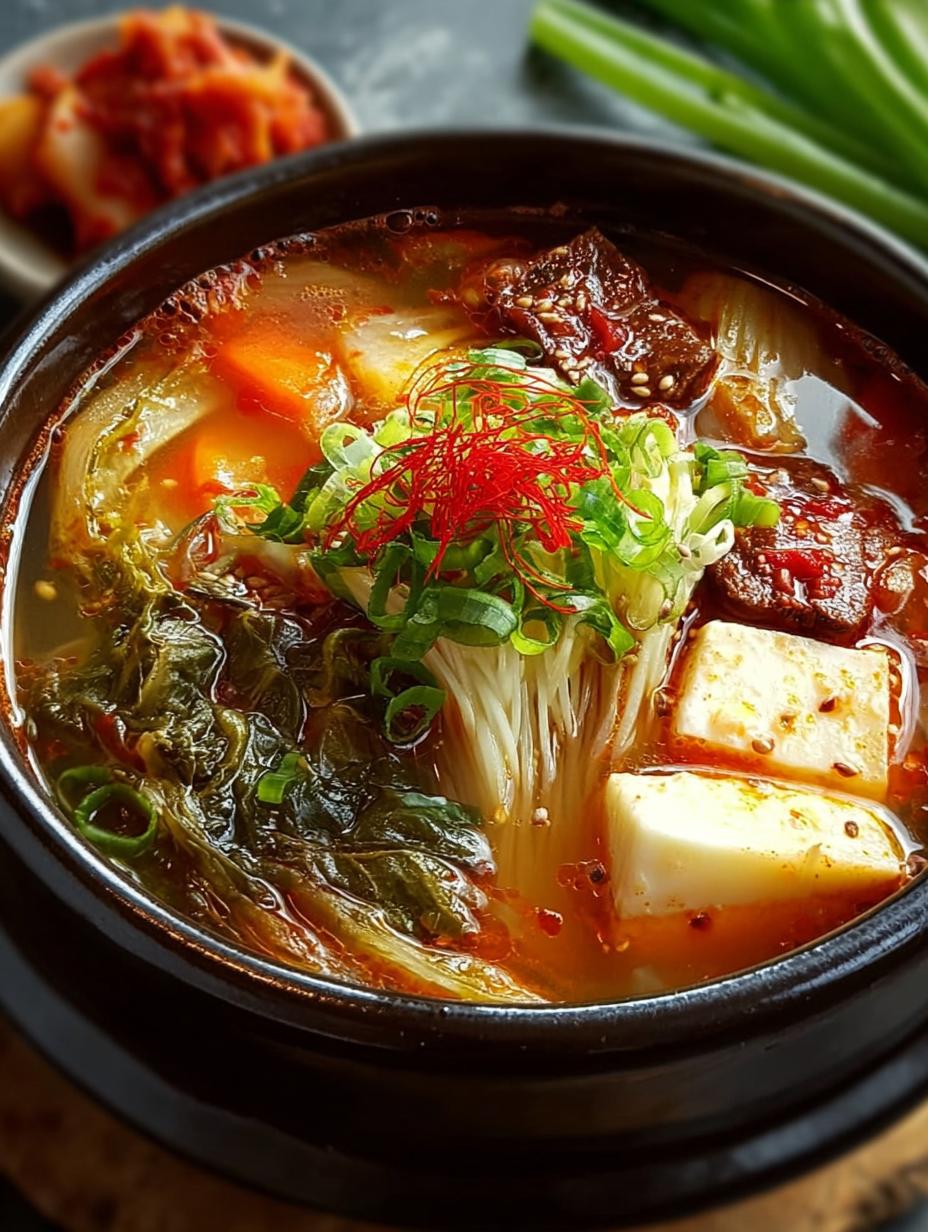
How to Store and Reheat Korean Winter Soup
To store, let the soup cool to room temperature, then transfer it to an airtight container. It can be kept in the fridge for up to 4 days. To reheat, simply warm it on the stove until heated through, adding a splash of water if necessary. This soup is perfect for meal prep, and you can make a big batch to enjoy throughout the week.
Frequently Asked Questions About Korean Winter Soup
What’s the secret to perfect Korean Winter Soup?
The secret lies in the simmering process and using quality ingredients. The longer you simmer the broth, the more flavorful it becomes, allowing the spices to meld beautifully.
Can I make Korean Winter Soup ahead of time?
Yes, this soup is perfect for making ahead. It actually tastes better the next day as the flavors continue to develop and deepen.
How do I avoid common mistakes with Korean Winter Soup?
To avoid common mistakes, ensure you skim the broth well to remove impurities and don’t rush the simmering process. Take your time to let the flavors build.
Variations of Korean Winter Soup You Can Try
Feel free to experiment with these variations:
- Add mushrooms for an earthy flavor.
- Incorporate different vegetables like carrots or zucchini.
- Try adding noodles for a heartier dish.
These modifications can cater to various dietary preferences while keeping the essence of this wonderful Korean comfort food in winter.
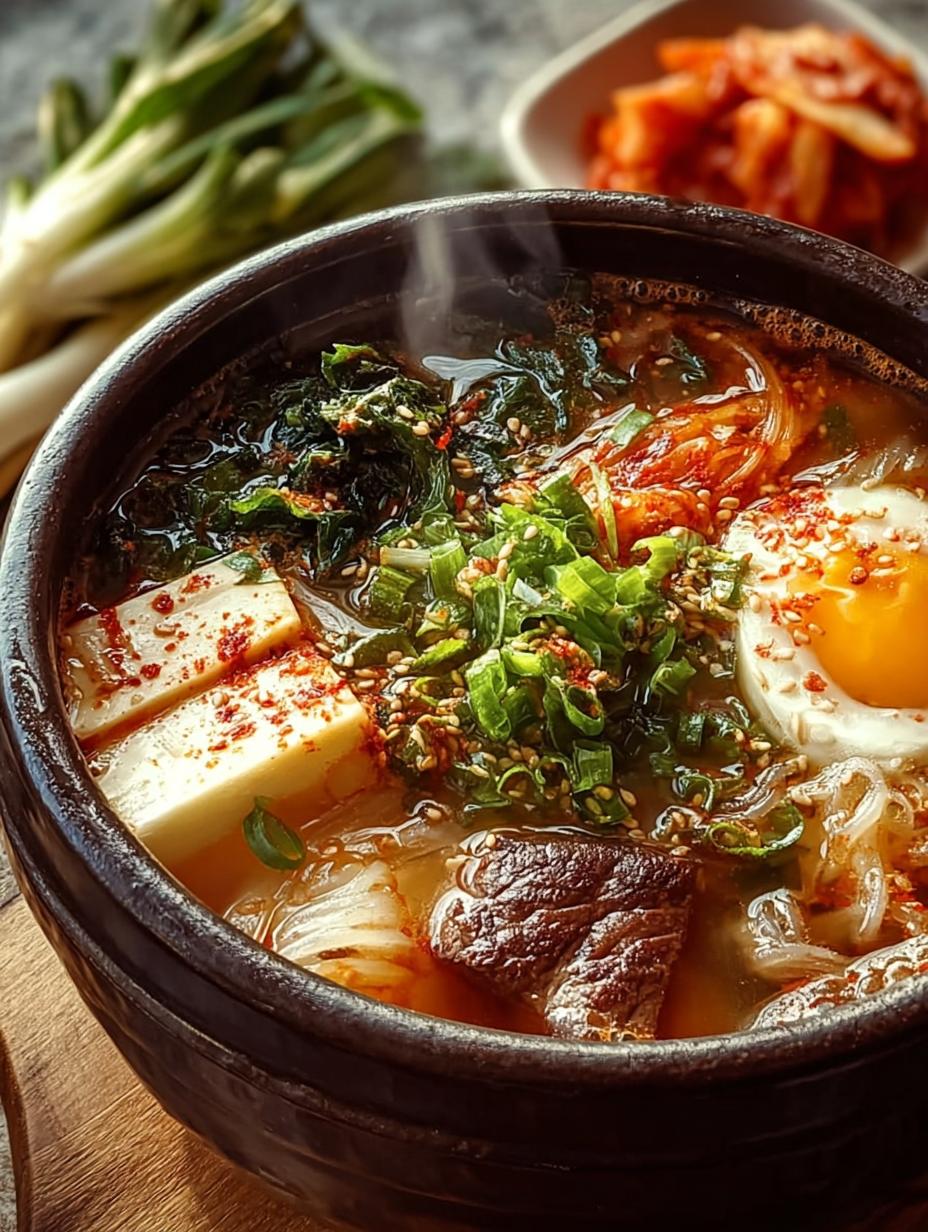
For more delicious recipes, check out our latest recipes or try making cheesy chicken noodle soup for a comforting meal. If you’re interested in Korean cuisine, you might also enjoy Korean ground beef bowl, which is another flavorful dish.
For authentic Korean flavors, you can learn more about Korean cooking techniques that enhance your culinary skills.
Print
Korean Winter Soup: 7 Hearty Comfort Recipes for Cold Days
- Total Time: 65 minutes
- Yield: 4 servings 1x
- Diet: Gluten Free
Description
Tender beef brisket and fresh vegetables simmered in a rich, spicy Korean broth. Perfect comfort food for cold winter nights with gochujang and gochugaru creating layers of warming heat.
Ingredients
- 1 pound beef brisket (cut into 2-inch pieces)
- 8 cups water
- 3 tablespoons soy sauce
- 2 tablespoons Korean red pepper paste (gochujang)
- 1 tablespoon Korean red pepper powder (gochugaru)
- 4 cloves garlic (minced)
- 1 large onion (chopped)
- 2 cups napa cabbage (sliced)
- 14 oz firm tofu (cubed (1 block))
- 1 cup daikon radish (sliced)
- 2 tablespoons sesame oil
- 2 stalks green onions (sliced)
- salt and pepper (to taste)
- cooked white rice (for serving)
Instructions
- In a large pot, add the beef brisket and water. Bring to a boil over high heat, then reduce to a simmer for about 30 minutes until the beef is tender. Keep the lid slightly ajar to prevent overflows and stir occasionally.
- Skim off any impurities that rise to the surface using a fine-mesh skimmer. Gently skim the top every few minutes until the broth is clear and free of foam.
- Add the soy sauce, gochujang, gochugaru, and minced garlic into the pot. Stir well to combine, making sure the chili paste dissolves fully into the broth for an even, rich color.
- Add the chopped onion, napa cabbage, tofu cubes, and daikon radish. Continue to simmer the soup for another 20 minutes, allowing the vegetables to soften and the tofu to absorb the spicy, savory flavors.
- In a small pan, heat the sesame oil over medium heat. Add the sliced green onions and saute until fragrant, about 1-2 minutes. Pour this aromatic oil and onion mixture into the soup.
- Season the soup with salt and pepper to taste. Adjust as necessary – add more soy sauce for depth or a pinch of gochugaru for extra heat.
- Serve hot with steamed white rice on the side. Ladle generously into bowls, letting the rice soak up the spicy broth for a satisfying, warming meal.
Notes
- Prep Time: 15 minutes
- Cook Time: 50 minutes
- Category: Soup
- Method: Simmering
- Cuisine: Korean
Nutrition
- Serving Size: 1 bowl
- Calories: 450
- Sugar: 3 g
- Sodium: 800 mg
- Fat: 26 g
- Saturated Fat: 5 g
- Unsaturated Fat: 20 g
- Trans Fat: 0 g
- Carbohydrates: 22 g
- Fiber: 3 g
- Protein: 35 g
- Cholesterol: 70 mg
Keywords: Korean Winter Soup