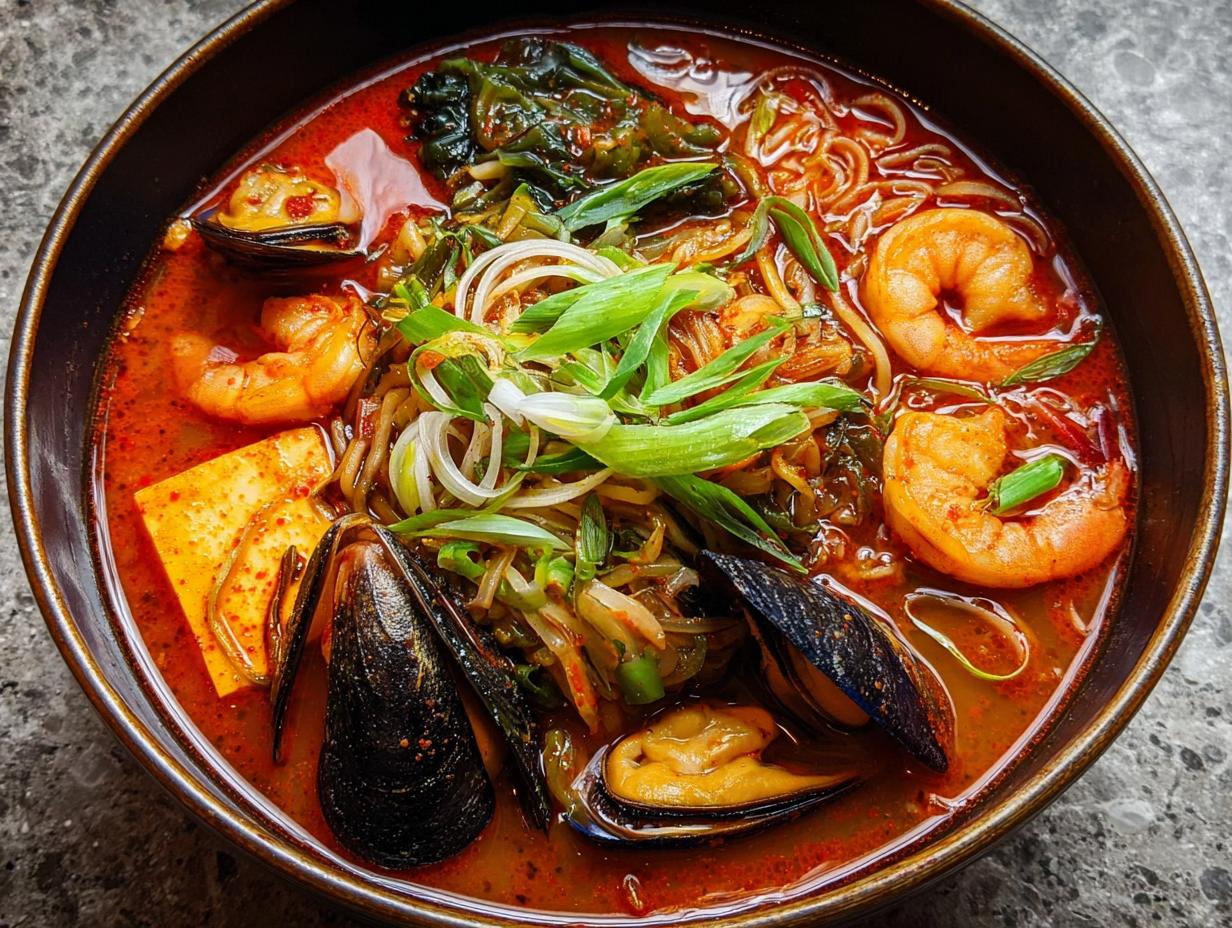
Spicy Korean Jjamppong Mixed has a way of warming me from the inside out, like a comforting hug on a chilly evening. I remember the first time I tried authentic Jjamppong; the rich, fiery broth, the tender seafood, and those perfectly chewy noodles just blew me away. It’s more than just a meal; it’s an experience that awakens the senses with its bold flavors and tantalizing aroma. This Korean spicy seafood noodle soup is truly a showstopper, perfect for impressing guests or treating yourself. Let’s get cooking!
Why You’ll Love This Spicy Korean Jjamppong Mixed
Get ready to fall in love with this incredible dish! It’s packed with flavor and surprisingly easy to make at home.
- An explosion of bold, spicy, and savory flavors that will tantalize your taste buds.
- Loaded with a generous amount of fresh, assorted seafood for a truly satisfying meal.
- This Jjamppong recipe with mixed seafood comes together faster than you might think, perfect for weeknights.
- The rich, aromatic broth is incredibly comforting, especially on a cold day.
- It’s a fantastic way to enjoy a restaurant-quality Korean spicy seafood noodle soup in your own kitchen.
- The combination of chewy noodles and tender seafood is pure bliss.
- This Jjamppong recipe with mixed seafood is easily customizable to your favorite types of seafood.
- Impress your friends and family with this authentic and incredibly delicious dish!
Ingredients for Spicy Korean Jjamppong
Gathering these Spicy Korean jjamppong ingredients is the first step to creating this amazing dish. I’ve found that using a mix of fresh and optional frozen seafood really makes it special, and don’t skip the aromatics – they’re key!
- 1 tablespoon vegetable oil – for sautéing
- 1 tablespoon sesame oil – adds nutty depth
- 2 tablespoons gochugaru (Korean red pepper flakes) – the heart of the spice
- 1 tablespoon minced garlic – essential for flavor
- 1 tablespoon minced ginger – brings a zesty warmth
- 1 small onion, thinly sliced – about 1 cup
- 1/2 cup chopped Napa cabbage – for sweetness and texture
- 1/2 cup zucchini, julienned – adds a fresh bite
- 1/2 cup carrots, julienned – for color and slight sweetness
- 2 scallions, chopped – divided for cooking and garnish
- 2 tablespoons gochujang (Korean red chili paste) – adds a complex chili flavor
- 2 tablespoons soy sauce – for salty umami
- 1 tablespoon oyster sauce – for richness and depth
- 5 cups chicken or anchovy stock – the flavorful base of our broth
- 1/2 teaspoon sugar – balances the spicy and savory notes
- Salt and pepper to taste – adjust to your preference
- 1/2 pound mussels, scrubbed and debearded
- 1/2 pound clams, scrubbed
- 1/2 pound squid, cleaned and sliced into rings
- 1/2 pound shrimp, peeled and deveined
- 1/2 pound firm white fish (like cod or tilapia), cut into bite-sized chunks
- 1/2 pound frozen seafood mix (optional) – for convenience and variety
- 14 oz fresh or dried Korean wheat noodles (or ramen/udon) – the perfect vehicle for the broth
- Chopped scallions (for garnish)
- Sliced fresh red chili (for garnish)
- Drizzle of sesame oil (for garnish)
How to Make Spicy Korean Jjamppong
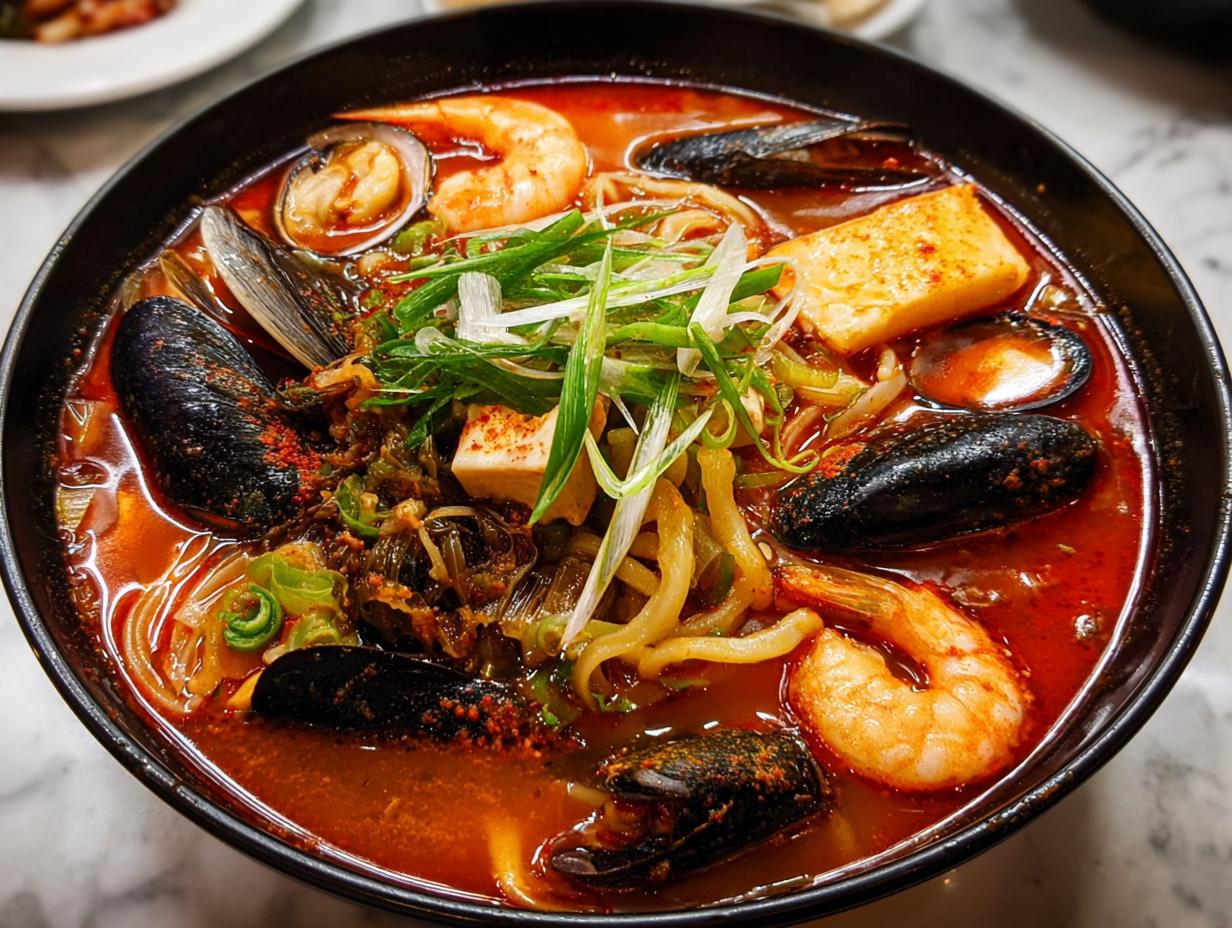
Making this spicy seafood noodle soup at home is easier than you think! Follow these steps to create a truly authentic dish.
- Step 1: Prepare your seafood bounty. If you’re using a frozen seafood mix, thaw it completely. Give your mussels a good scrub and remove any beards. Clean your clams thoroughly. Slice the squid into rings and cut your fish into bite-sized chunks. Peel and devein the shrimp. Having everything prepped makes the cooking process smooth and enjoyable.
- Step 2: Sauté the aromatics and vegetables. Heat both the vegetable and sesame oil in a large, heavy-bottomed pot or Dutch oven over medium heat. Add the minced garlic, ginger, and gochugaru. Stir constantly for about 30 seconds until you can smell their wonderful fragrance – be careful not to burn them! Next, toss in the thinly sliced onion, chopped Napa cabbage, julienned zucchini, and carrots. Sauté these for about 4–5 minutes, allowing them to soften slightly and release their flavors.
- Step 3: Build the flavorful broth. Now, stir in the gochujang (Korean red chili paste), soy sauce, oyster sauce, sugar, and a pinch of pepper. Cook for another minute, stirring well to combine everything. Pour in the chicken or anchovy stock. Bring this mixture to a rolling boil, then reduce the heat to low and let it simmer gently for 10 minutes. This allows all those amazing flavors to meld together beautifully.
- Step 4: Add the seafood and cook. Carefully add the mussels and clams to the simmering broth. Cover the pot and let them cook for about 3–4 minutes, or until they start to open. Then, add the shrimp, squid, and white fish. Continue to simmer for another 5–6 minutes, or until all the seafood is cooked through and opaque. Remember to discard any shellfish that remain unopened. This is where how to make spicy Korean jjamppong truly comes alive!
- Step 5: Cook the noodles and assemble. While the seafood is cooking, prepare your noodles according to the package directions. Whether you’re using fresh Korean wheat noodles, ramen, or udon, cook them until just tender. Drain them well and rinse them under cold water to stop the cooking process and remove excess starch. To serve, divide the cooked noodles among large serving bowls. Ladle the piping hot, spicy broth and all the delicious seafood generously over the noodles. Garnish with fresh chopped scallions, sliced red chili for an extra kick, and a final drizzle of sesame oil if you like. Enjoy this amazing spicy seafood noodle soup Korean style!
Pro Tips for the Best Jjamppong with Assorted Seafood
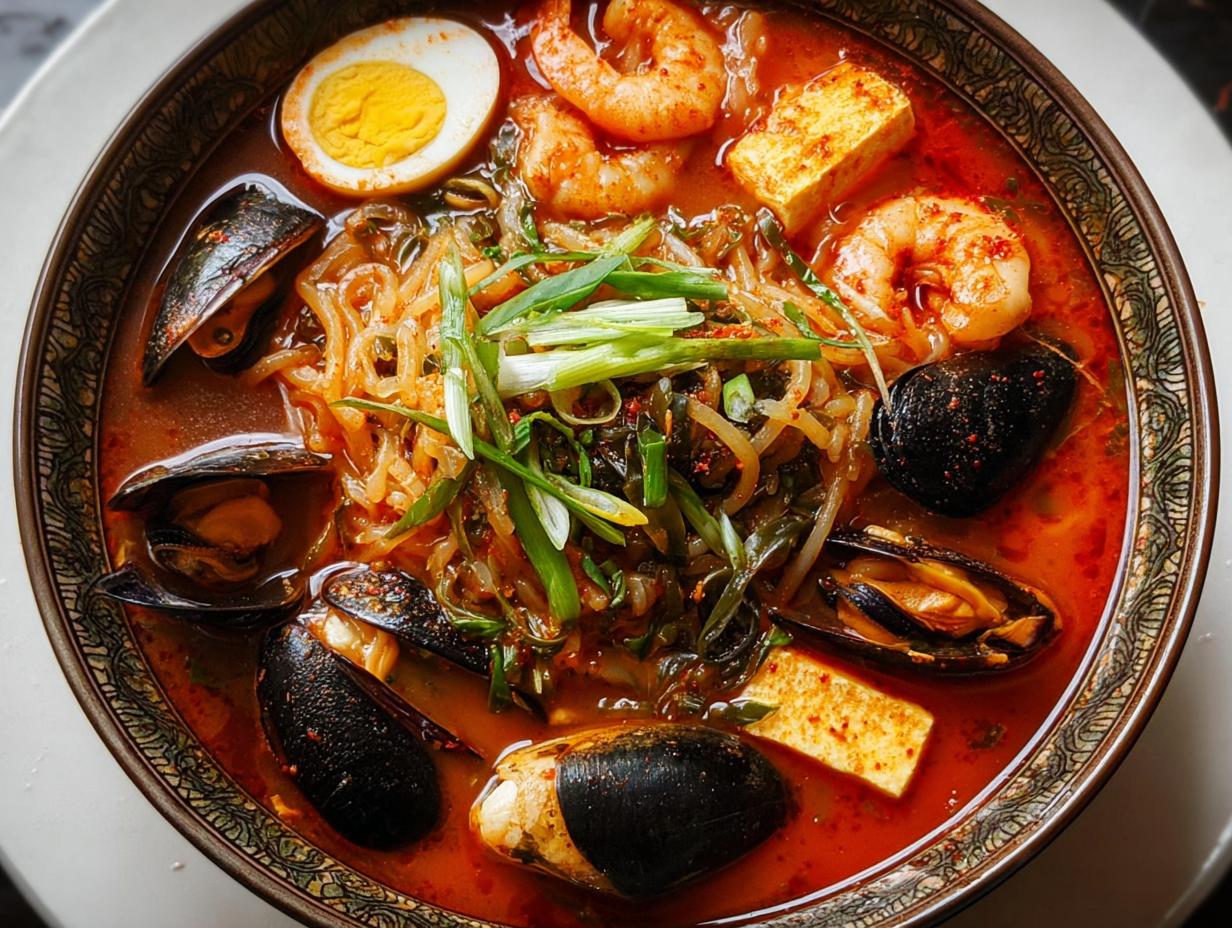
Want to elevate your spicy seafood noodle soup game? These tips will ensure your Jjamppong is restaurant-quality every time.
- Don’t be afraid of the gochugaru! Adjust the amount to your spice preference, but remember it’s a key flavor component.
- Sear your seafood briefly before adding it to the broth for extra depth of flavor.
- Rinsing your noodles under cold water is crucial to prevent them from becoming mushy in the hot broth.
- Taste and adjust the seasoning of your broth before serving; a little extra soy sauce or salt can make all the difference.
What’s the secret to perfect Spicy Korean Jjamppong Mixed?
The real secret lies in building layers of flavor. Start with a fragrant base of garlic, ginger, and gochugaru, then enrich the broth with gochujang, soy, and oyster sauces. This creates the complex, authentic spicy jjamppong noodle dish you crave. For more insights into Korean cooking, check out these Korean BBQ meatballs.
Can I make Jjamppong with assorted seafood ahead of time?
You can prep most components ahead, like chopping vegetables and cleaning seafood. However, I recommend cooking the broth and adding the seafood just before serving to ensure everything is fresh and perfectly cooked. Cooked noodles are best made fresh too.
How do I avoid common mistakes with Spicy Korean Jjamppong Mixed?
A common pitfall is overcooking the seafood, which makes it tough. Add delicate seafood like shrimp and fish towards the end of cooking. Also, ensure your gochugaru is fresh for the best flavor and heat. Finally, don’t skip rinsing the noodles!
Best Ways to Serve Authentic Spicy Jjamppong Noodle Dish
Serving this vibrant dish is all about enhancing its bold flavors. I love presenting it piping hot, straight from the pot, to really let the aromas shine.
For a truly complete meal, consider pairing your best spicy Korean seafood noodles with some simple, palate-cleansing banchan (side dishes). A small bowl of pickled radish or a refreshing cucumber salad can offer a nice contrast to the richness of the Jjamppong. You can also serve it with a side of plain white rice for those who want to soak up every last drop of that incredible broth. It’s a feast for the senses!
Nutrition Facts for Spicy Korean Jjamppong Mixed
Let’s talk about what goes into this delicious bowl of Korean spicy seafood noodle soup. Keep in mind these are estimates, as the exact amounts can vary wildly based on the specific seafood you use and how much broth you ladle into your bowl.
- Calories: Approximately 450-550 kcal
- Fat: Varies
- Saturated Fat: Varies
- Protein: Varies
- Carbohydrates: Varies
- Fiber: Varies
- Sugar: Varies
- Sodium: Varies
Nutritional values are estimates and will vary based on specific ingredients and portion sizes used in your Spicy Korean Jjamppong Mixed.
How to Store and Reheat Jjamppong Recipe with Mixed Seafood
You’ve made a fantastic batch of this spicy Korean noodle soup, and now you’re wondering how to keep those delicious leftovers fresh. Proper storage is key to enjoying your Spicy Korean jjamppong at home later on!
First, always let the Jjamppong cool down completely before storing. This prevents condensation and keeps the broth from becoming cloudy. Once cooled, transfer any remaining broth, noodles, and seafood into airtight containers. Store these in the refrigerator for up to 3 to 4 days. For longer storage, you can freeze individual portions for up to 3 months. Just make sure to use freezer-safe containers or heavy-duty freezer bags.
Reheating is simple! For refrigerated leftovers, gently warm the broth and seafood in a pot over medium-low heat, being careful not to overcook the seafood. You can reheat the noodles separately or add them to the broth to warm through. For frozen portions, thaw them overnight in the refrigerator first, then reheat as you would the refrigerated leftovers. Enjoy your delicious spicy Korean seafood noodle soup again!
Frequently Asked Questions About Spicy Korean Jjamppong Mixed
Can I substitute the seafood in this Spicy Korean Jjamppong Mixed?
Absolutely! While this recipe calls for a mix, feel free to use your favorites. If you love shellfish, add more mussels or clams. If you prefer fish, cod or snapper work wonderfully. For an even quicker meal, a good quality frozen seafood mix is a lifesaver. The key is to ensure all seafood is cooked through but not overdone, keeping that tender texture.
Why is my Jjamppong not spicy enough?
The heat in Jjamppong comes primarily from gochugaru (Korean red pepper flakes) and gochujang (Korean red chili paste). For a spicier broth, simply increase the amount of gochugaru you add during the sautéing step. You can also add a pinch of cayenne pepper or a dash of your favorite hot sauce to the broth. Remember, you can always add more spice, but you can’t easily take it away!
What are the best noodles to use for Korean spicy seafood noodle soup?
Traditionally, Jjamppong uses a thick, chewy wheat noodle similar to ramen or udon. Fresh Korean wheat noodles, often called *somyeon* or *jjajangmyeon* noodles, are ideal if you can find them. However, good quality ramen or udon noodles work perfectly well and are readily available. The goal is a noodle that holds up to the robust broth without becoming mushy. These noodles make for the best spicy Korean seafood noodles experience.
How do I make the broth richer for my Spicy Korean Jjamppong Mixed?
The richness comes from good quality stock and the sautéed aromatics. Using a flavorful chicken or anchovy stock is crucial. Don’t skip the gochujang and oyster sauce, as they add significant depth and umami. For an even richer broth, you can simmer it a bit longer after adding the aromatics and before adding the seafood, allowing the flavors to concentrate further.
Variations of Korean Spicy Seafood Noodle Soup You Can Try
While this recipe is fantastic as is, don’t be afraid to get creative! There are so many delicious ways to make this Spicy seafood noodle soup Korean style your own. Here are a few ideas to spark your culinary imagination.
- Vegetarian/Vegan Jjamppong: Omit the seafood and use a rich vegetable broth. Add extra firm tofu, mushrooms (like shiitake or king oyster), and more vegetables for a hearty meat-free version. Ensure your gochujang and oyster sauce (if using a vegan alternative) are vegan-friendly.
- Creamy Jjamppong: For a decadent twist, stir in a splash of heavy cream or coconut milk towards the end of cooking. This mellows the spice slightly and adds a luxurious, creamy texture to the broth, creating a unique flavor profile.
- Quick Stir-Fried Jjamppong: Instead of serving in broth, drain the cooked noodles and seafood well. Stir-fry them with the flavorful broth base and vegetables in a wok for a less soupy, more intense experience. This is a fun way to enjoy the flavors of Jjamppong in a different format.
- Spicy Pork Jjamppong: If you’re not a seafood fan, swap the seafood for thinly sliced pork belly or pork shoulder. Marinate the pork briefly in soy sauce and garlic before adding it to the sautéed aromatics.
For more delicious recipes, explore the latest recipes available.
If you’re interested in learning more about the health benefits of seafood, you can find information from reputable sources like the U.S. Food and Drug Administration.
Discover other ways to prepare chicken with these garlic honey lime chicken recipes.
Print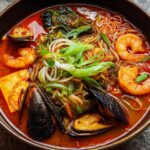
Spicy Korean Jjamppong Mixed Burst of Flavor
- Total Time: 45 minutes
- Yield: 4 servings 1x
- Diet: Seafood
Description
This Spicy Korean Jjamppong with mixed seafood and noodles is a bold, fiery, and deeply satisfying dish. It features a rich, spicy broth packed with fresh seafood and vegetables, served over chewy noodles. It’s a perfect soul-warming meal, especially on cold nights.
Ingredients
- 1 tablespoon vegetable oil
- 1 tablespoon sesame oil
- 2 tablespoons gochugaru (Korean red pepper flakes)
- 1 tablespoon minced garlic
- 1 tablespoon minced ginger
- 1 small onion, thinly sliced
- 1/2 cup chopped Napa cabbage
- 1/2 cup zucchini, julienned
- 1/2 cup carrots, julienned
- 2 scallions, chopped
- 2 tablespoons gochujang (Korean red chili paste)
- 2 tablespoons soy sauce
- 1 tablespoon oyster sauce
- 5 cups chicken or anchovy stock
- 1/2 teaspoon sugar
- Salt and pepper to taste
- 1/2 pound mussels, scrubbed and debearded
- 1/2 pound clams, scrubbed
- 1/2 pound squid, cleaned and sliced into rings
- 1/2 pound shrimp, peeled and deveined
- 1/2 pound firm white fish (like cod or tilapia), cut into bite-sized chunks
- 1/2 pound frozen seafood mix (optional)
- 14 oz fresh or dried Korean wheat noodles (or ramen/udon)
- Chopped scallions (for garnish)
- Sliced fresh red chili (for garnish)
- Drizzle of sesame oil (for garnish)
Instructions
- Prepare the seafood: Thaw frozen seafood if using. Clean mussels and clams. Slice squid and fish. Peel shrimp. Set aside.
- Sauté aromatics: Heat vegetable and sesame oil in a large pot over medium heat. Add garlic, ginger, and gochugaru. Stir for 30 seconds until fragrant.
- Add vegetables: Add onions, cabbage, zucchini, and carrots. Sauté for 4–5 minutes until slightly softened.
- Build the broth: Stir in gochujang, soy sauce, oyster sauce, sugar, and pepper. Pour in stock. Bring to a boil, then simmer for 10 minutes.
- Cook seafood: Add mussels and clams. After 3–4 minutes, add shrimp, squid, and fish. Simmer for 5–6 minutes until all seafood is cooked. Discard unopened shellfish.
- Cook noodles: Cook noodles according to package instructions. Drain and rinse under cold water.
- Assemble: Divide noodles among bowls. Ladle hot broth and seafood over the noodles. Garnish with scallions, chili, and sesame oil if desired.
Notes
- Discard any unopened shellfish after cooking.
- Rinse noodles under cold water to stop cooking and remove excess starch.
- Garnishes are optional but recommended for added flavor and visual appeal.
- Prep Time: 20 minutes
- Cook Time: 25 minutes
- Category: Main Course
- Method: Stovetop
- Cuisine: Korean, Chinese
Nutrition
- Serving Size: 1 serving
- Calories: Approximately 450-550 kcal (will vary based on specific ingredients and portion size)
- Sugar: Varies
- Sodium: Varies
- Fat: Varies
- Saturated Fat: Varies
- Unsaturated Fat: Varies
- Trans Fat: 0g
- Carbohydrates: Varies
- Fiber: Varies
- Protein: Varies
- Cholesterol: Varies
Keywords: Spicy Korean Jjamppong Mixed, Korean spicy seafood noodle soup, Jjamppong recipe with mixed seafood, How to make spicy Korean jjamppong, Authentic spicy jjamppong noodle dish, Best spicy Korean seafood noodles, Spicy Korean jjamppong ingredients, Jjamppong with assorted seafood, Spicy seafood noodle soup Korean style, What is Korean jjamppong mixed, Spicy Korean noodle soup recipe, Korean spicy noodle soup with seafood, Jjamppong mixed seafood recipe, How to cook spicy Korean jjamppong, Spicy Korean jjamppong at home, Korean jjamppong seafood mix, Why is jjamppong spicy, Spicy Korean seafood noodle soup ingredients, Jjamppong seafood noodle soup recipe, Korean spicy noodle soup with mixed seafood